Monday, November 20, 2006

Family Time

It has been said that one of the consolations about loved ones being apart most of the time is the joy of anticipating the times when they can get together again.

And in this modern times, when the demands of work and the search for economic opportunities do tend to tear families apart and separate them from each other often over long distances, it has become more and more difficult for family members to find time and arrange schedules so that they can meet, reconnect and have fun together.

Filipino families, even many from small and remote towns like Lianga, have become, in this sense, globalized and this causes unique problems in a culture that sets the importance of family ties above all and where regular physical contact and interactions between close relatives are valued, encouraged and considered essential to the survival of the family and clan unit as viable and living entities.

It is true that Filipinos far from home have found ways to combat homesickness and maintain contact with their relatives and loved ones in a myriad of ways. Most make use of the internet and through e-mails, voice and video chats try to keep in touch. Others who prefer the time tested and traditional methods, write letters or make long-distance calls.

But nothing still beats the old fashioned family get together. That is what everybody lives, works and sacrifices for. The chance to throw aside the cares, burdens and responsibilities of a brutal world and spend time with the people who matter to you most; the chance to invest valuable time, money and effort in something that always nevers fail to return the most generous returns, immaterial and intangible it may be.

Thursday, November 16, 2006

Papaya Man

We met him in a small village almost a dozen kilometers outside of town, a wizened old man, stooped a little with age and carrying in his two hands the biggest papaya I and my companion have ever seen.

It was round almost like a basketball and very much bigger than one. And when we had it cut open, the meat inside was a rich yellow-red, thick, juicy and absolutely delicious.

The old man took us to his small garden in the back of his small nipa hut and proudly showed us his small orchard of some two dozen papaya trees, all just taller than an average man yet every tree was fully laden with huge, round fruits that were still green although many were already streaked with yellow and probably nearly ripe. "My pride and joy," he said to us as we gaped and oohed at the astonishing sight.

After another serving of the fruit treat, we settled down to the business at hand. I told the old man that my companion had heard of his papaya trees and would like to buy some seedlings if he would allow that. My companion, I added, is an avid gardener and had a few fruit trees of his own but he loved papayas and would like to plant a few of the old man's variety for his own garden. But the old man refused saying that he did not sell seedlings. "They are like my children," he added with finality, "A man does not sell his children."

Disappointed, we left for the car but as we got inside, the old man came swiftly after us and, through the open car window, handed to my astonished companion four seedlings packed snugly together in a small cardboard carton. Refusing all payment, he smiled and said, "I could see that you a good man and that you will make a good home for my papaya trees. I cannot sell them but I can surely give you some." With that and a final wave, he left us.

As we went home, I realized that we got more than what we came for. We not only have the seedlings but we also met an unforgettable character, a person who just reaffirmed our belief in something we often have lost faith in; the fundamental truth that human nature, at its core, is basically good and that generosity is a natural consequence of unselfish love.

Monday, November 13, 2006

A Brooding Presence

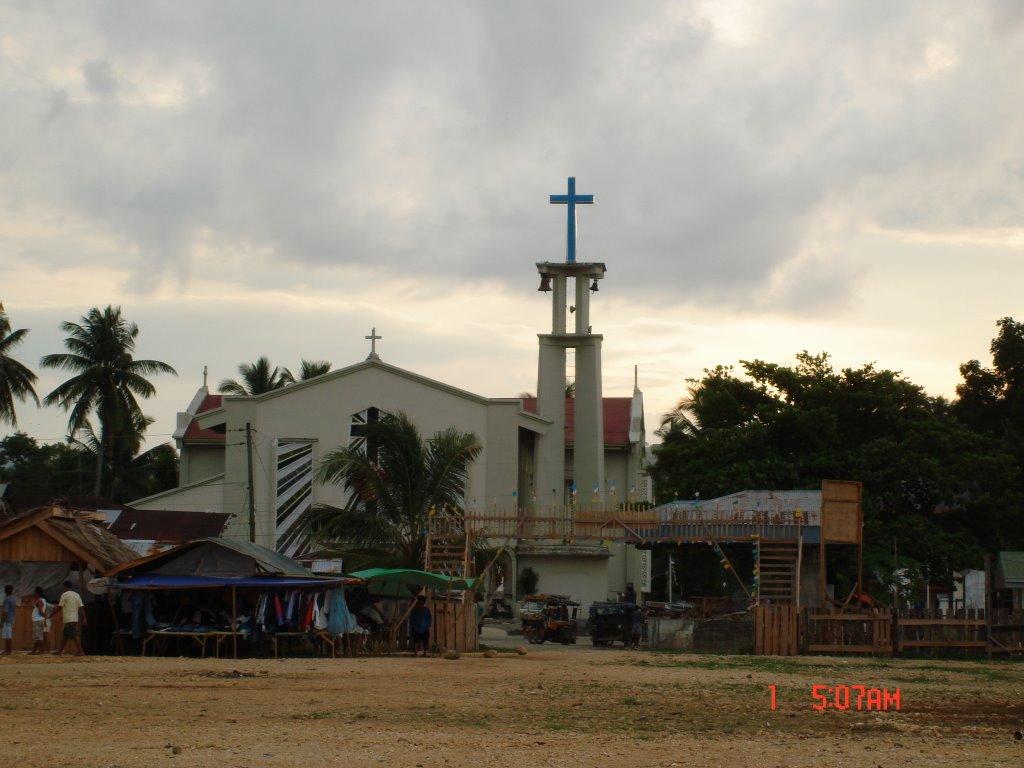
The town of Lianga, like most of old towns in the Philippines, is built on the classic pattern of streets running parallel to the town center where the triangle of the Catholic church, the municipal hall and the town park dominates.

But in the placement of these buildings and structures, the original town planners left no doubt as to which structure was the most significant, the most important and which represented the real power in the life and affairs of the community not only in this life but also in the next.

The present Catholic parish church in Lianga, which follows the traditional cruciform floor plan of many Christian churches all over the world, was built over a previously more modest wooden structure in the 1950's. By local standards, the building is an imposing structure and together with its 100 foot plus tall belltower, it contrasts sharply with some of the other newer churches in the neighboring towns which have opted for a more modernist look. The parish church of San Agustin town some 26 kilometers north of Lianga is similar in form and design and was probably built from the same architectural plans.

That the church, both as a building structure and as a religious institution, dominates life in Lianga is less true now than in the past but it still can cast a large and powerful shadow over the local population if and when it chooses to. Other Christian sects and denominations may have already gained a firm foothold in the town and some have even expanded their membership substantially over the years but the cross of the Vatican still reigns supreme over the religious landscape in the same way that the church bell tower dominates the town skyline.

And since religious dominance translates to social, cultural and political influence, there is no doubt that the Church is still a major force to reckon with even in these times of declining church attendance and the increasing secularization of Filipino society. After all, more than 300 years after the Spaniards introduced it in the Philippines, Catholicism has become so deeply imprinted in the Filipino soul and psyche that even non-Catholics are not immune from its influence.

That Lianga will remain predominantly Catholic in the near future is certain but times are changing and the challenges it has to face are enormous as well as daunting. But when one has the opportunity to visit the parish church in Lianga and go inside the white painted concrete walls with their long vertical windows of colored glass and stand before the high altar underneath the high ceiling, one becomes aware a feeling of comfort and reassurance, a dawning realization that this is a monument not only to a religion but to decades of history and a testament to a people linked by a common heritage and the shared hopes, dreams and prayers for a better, kinder and more comprehensible tomorrow.

If only in that sense, at least, one can gain a modicum of optimism for the future, as bleak as it may appear to be.

Friday, November 10, 2006

Hidden Treasures

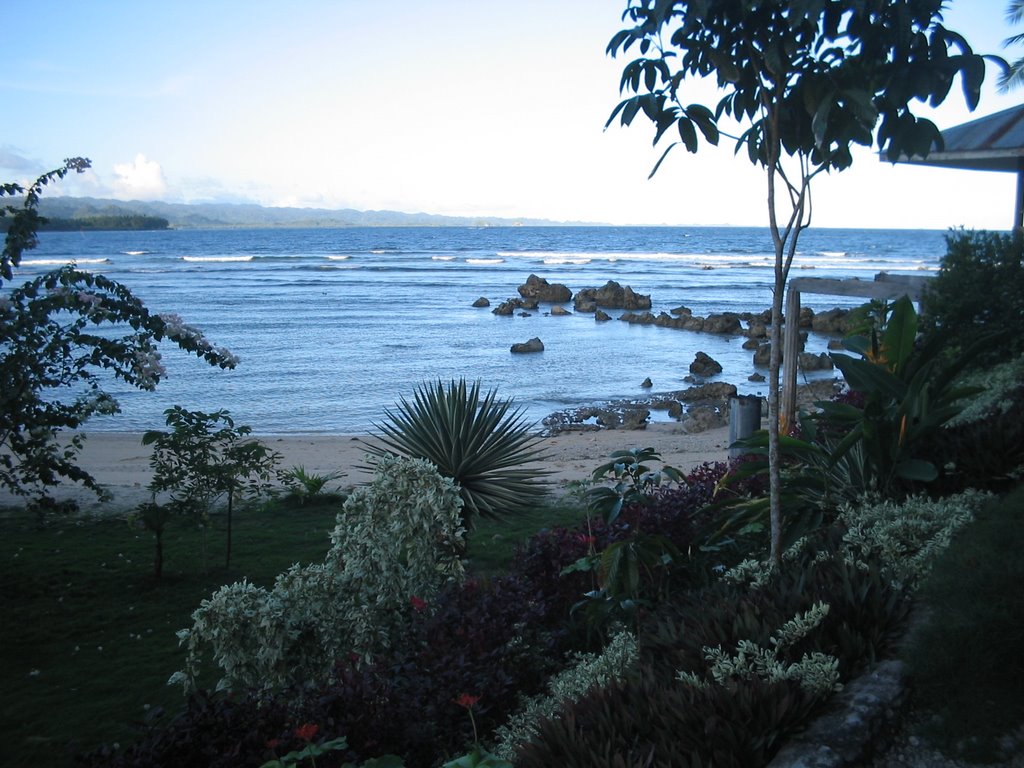
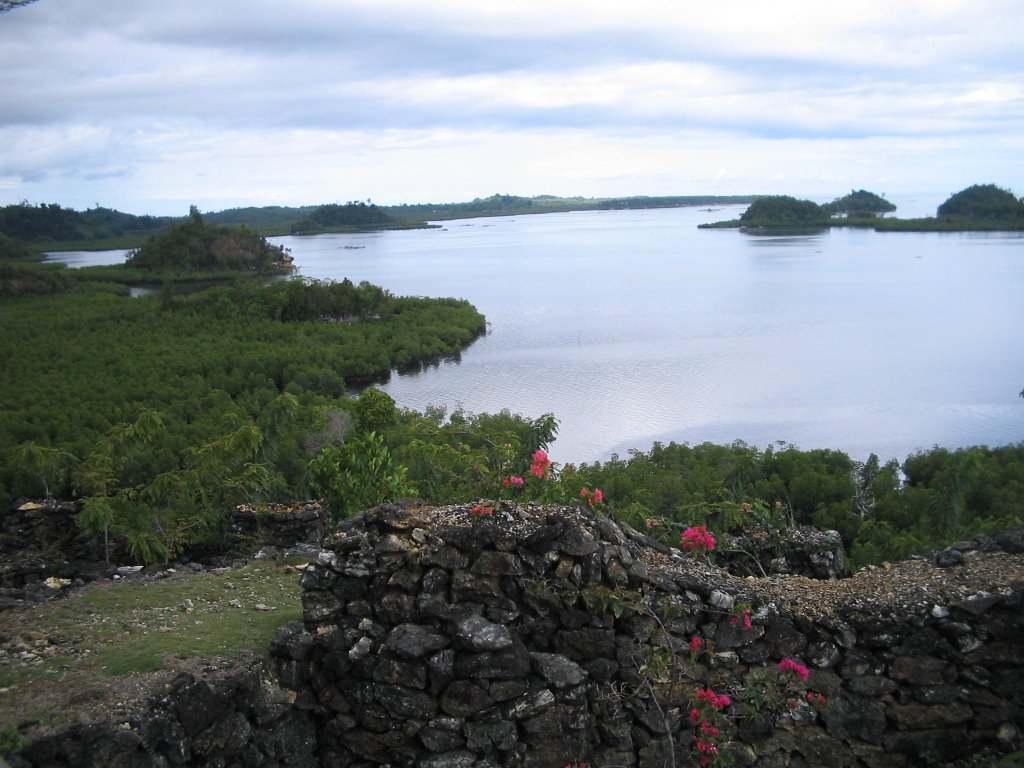
One of the benefits of living in a rural and coastal community like Lianga is the opportunity to discover, without even intending to, hidden places where coincidence and the magic forces of nature bring forth spectacular vistas and sceneries.

One can simply be walking along a seldom used trail in a remote portion of the coast or traveling by car through the hot and dusty roads when like a flash, it strikes you out of the blue and you simply have to stop, stare and drink in scenes of such overpowering beauty that you can be lost in wonder as time seems to stand still and eternity looks at you in the eye.

I once had an uncle from the United States who was so mesmerized by these random bits of breathtaking beauty that it took us over three hours to travel 89 kilometers. He had to ask me many times to stop the car then he had to get out, revel in the scenery and then take souvenir pictures. The good thing about the whole experience was that I saw these places again through his eyes and gained a better perspective and appreciation for what I may have, over time, dismissed lightly and taken for granted.

The latter is the reason why the local people must remain conscious and appreciative of the beauty that surrounds them and the natural environment that not only sets the backdrop for such beauty but also protects and nurtures it. It is true that the best things in life are free but the fact that they have been given freely often leads to a cavalier and callous attitude in the face of the environmental damage and destruction brought about not only by nature itself but by the hand of man as well.

One must also remember that the struggle to protect the environment is not only a battle to preserve the aesthetic aspects of it but a broad struggle to protect cultures and cultural values, ways and patterns of living as well as the "soul" of the people whose lives revolve and depend upon the solid earth on which they walk, the mountains and valleys that define and delineate their world and the rivers and oceans that refresh and nurture it.

Tuesday, November 7, 2006

A Sporting State Of Mind

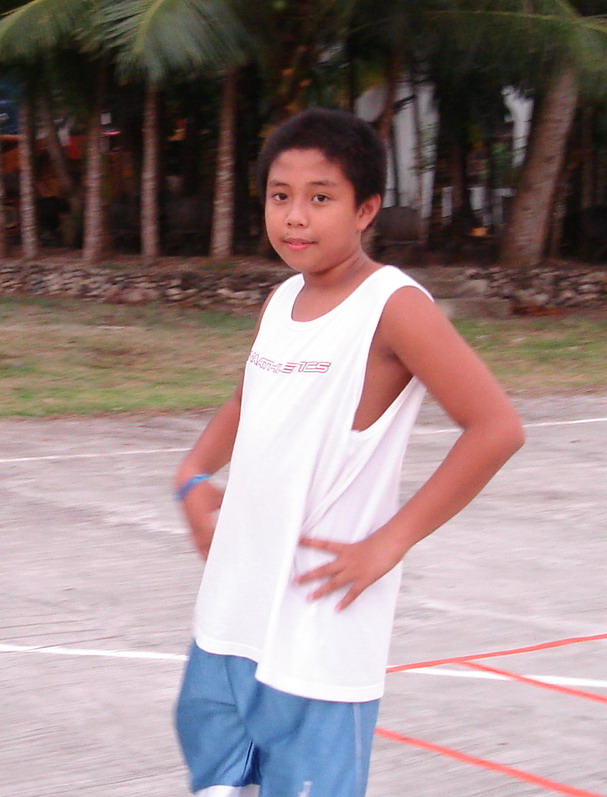
He thrills to the fantasy of being LeBron James weaving skillfully past the opposition for the heartstopping basketball dunk or Kennevic Asuncion crushing foes on the badminton court.

That he can also play a mean game of both real life basketball and badminton is clear proof positive of a definitely sports oriented nature, one that sees life as a sporting event to be played and won, if possible, with the maximum application of will and skill and where losing can be like the bitter taste of ashes in the mouth and something to agonize and shed tears over.

I have seen him often playing basketball by himself and there is an obsessive quality to the manner in which he skillfully dribbles and with a deft, shooting touch sink shots into the hoop. That and the concentration and focus in the eyes reveal that all this is no mere game or practice workout but the playing and replaying, in his mind, of the game of his life.

Many sporting legends have made their mark in history by performing feats of astonishing skill and discipline in the sporting events that they have dedicated their lives to mastering. They had their golden moments, those slices in time where they so distinguished themselves that they have raised themselves to sporting heights far above their peers.

Josh may or may never be the sports superstar he dreams to be, but that is of little consequence really. You see, everytime he plays, he plays with gusto and total commitment, as if this is the defining game, the event that really matters, and the final test of his skill and dedication. That, in my mind, makes him, unquestionably, a star.

Friday, November 3, 2006

The Smell Of Christmas Coming

It's November in Lianga and it cannot be denied that there is indeed the smell of Christmas in the air.

One can smell it in the crispness of the chilly early morning air before the searing heat of the day comes and in the occasional breath of cool wind that flows down from the mountains in the late afternoon and early evenings.

These also a certain sense of urgency that one can pick up as one goes around the town. That sense of nostalgia that conjures up happy images and memories of Christmases past.

That the times now are difficult is clear and unequivocal but there is something in the coming holidays that conjures up the best and the most generous in the human heart. Perhaps as the year dies and the seasons grow cold, as they are supposed to do, man returns with a longing to the themes of family, home and hearth. And in the case of the Filipino, that means not only the immediate family but the members of the clan, close friends and acquaintances.

There is also a special remembrance for those family members gone and those in far away places, whose absence will greatly missed.

There are many who say that Christmas is only for kids and the young. That may be so but I still look forward to the Yuletide holidays with no small anticipation. One can disdain the shallow materialism and commercialization of the original Christmas spirit. But despite that, it is still really about family and friends. For that reason alone, I will continue to celebrate it.