Friday, November 3, 2006

The Smell Of Christmas Coming

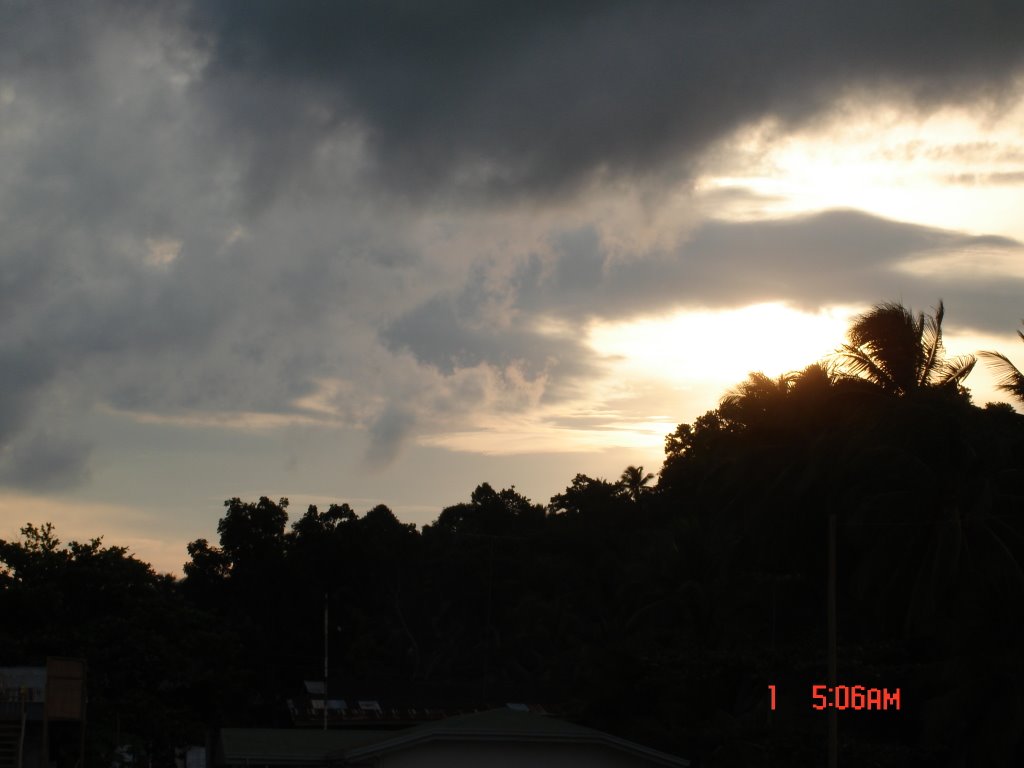
It's November in Lianga and it cannot be denied that there is indeed the smell of Christmas in the air.

One can smell it in the crispness of the chilly early morning air before the searing heat of the day comes and in the occasional breath of cool wind that flows down from the mountains in the late afternoon and early evenings.

These also a certain sense of urgency that one can pick up as one goes around the town. That sense of nostalgia that conjures up happy images and memories of Christmases past.

That the times now are difficult is clear and unequivocal but there is something in the coming holidays that conjures up the best and the most generous in the human heart. Perhaps as the year dies and the seasons grow cold, as they are supposed to do, man returns with a longing to the themes of family, home and hearth. And in the case of the Filipino, that means not only the immediate family but the members of the clan, close friends and acquaintances.

There is also a special remembrance for those family members gone and those in far away places, whose absence will greatly missed.

There are many who say that Christmas is only for kids and the young. That may be so but I still look forward to the Yuletide holidays with no small anticipation. One can disdain the shallow materialism and commercialization of the original Christmas spirit. But despite that, it is still really about family and friends. For that reason alone, I will continue to celebrate it.

Tuesday, October 31, 2006

Master Of The Game

The world of computer online games can be a dangerous and treacherous one, in a virtual reality sort of way. You can get blasted, vaporized, cut to pieces or smashed to oblivion among other things. And don't tell other serious gamers that it's all make believe. For them, it is real, well, almost real and when everything goes well, when luck and pure skill come together, the taste of victory can be as sweet and exhilarating as winning in real life.

My nephew delves in and out of this virtual world with ease and like an amphibian comfortable both in air and water, he thrives both in this world and the digital realm. But I suspect that like all of the world's digital warriors, he prefers the virtual world where the fun and excitement is pure and where the nagging and stultifying distractions of the real world do not apply.

There are those who say that computer games are not good for developing minds of growing children and teenagers. They believe that these games are too violent and instill the wrong values. My view is more ambivalent.

That the online world is often violent is true and in many cases the random violence and bloodthirst can be disruptive to young minds. But there is a difference with obsession and fascination, between responsible gaming and extreme addiction to the virtual world. The solution is, therefore, to encourage the former and discourage the latter.

My nephew is one of those who have become a masters of the digital gaming world. The challenges, conflicts, topography and physics of the virtual realm are as familiar to him as those of the real world we live in. The question remains whether he will be as successful in slaying the dragons and monsters of the real world as those in the world of that exists only in the innards of the machines of the digital age.

Friday, October 27, 2006

The Sentinel Revisited

Ever since I first wrote about the rocky islet or outcrop on the shallow tidal marshlands of Lianga with its light beacon on top of the white tower with the snaky winding staircase, my fascination with this amalgam of nature and human ingenuity has continued to deepen.

There is something about the purô, the name the locals have given it, that strikes the chords of that mystical element within all of us, a quality that gives it an aura of the supernatural, as if some hidden force of nature or nonhuman intelligence had shaped it and cause it to thrust itself out of the water and stand defiantly against the might of the sea and the wind.

When one views it up close, there is often an absurd thought that presses itself upon you especially when you run your hands against its rough and deeply fissured sides; the silly impression that the outcrop is somehow alive in some incomprehensible way. No wonder the old folk in the area tell stories of enchanted beings and mythical creatures that supposedly dwell there and who jealously guard this sanctuary from human trespassers and who have severely punished those who dared to violate their privacy without just cause.

That the purô is much a symbol of Lianga as well as a historical landmark is beyond doubt. That is why it pains me to see it so neglected and unappreciated even today. It is as if in the struggle to survive in the midst of increasingly difficult times, the local people have set aside all aesthetic and sentimental notions in favor of the practical and material. Something easy to understand and justify but what is also true is that the immaterial and the intangible are also as much a part of who we are as the immaterial. To forget that is to lose sight of our roots as individuals and as a people sharing a common history and heritage.

How long this symbol of Lianga will stand against the elements and the cruelty of nature remains to be seen but I have a nagging suspicion that its fate may be as uncertain and unclear as the town and the people it is so identified with.

Monday, October 23, 2006

When Evening Falls

In Lianga, the transition between the late afternoon and the early evening is usually be swift and dramatic.

First, the already soft light of the weakening afternoon sun starts to mellow even further and from the western sky a blaze of warm, yellow hues start to coat the tops of the roofs of the houses and shadows start to lengthen and merge in the streets beneath them.

People are suddenly outside their homes to savor the sudden coolness in the air after enduring the heat of sultry afternoons, their voices drifting up from the corners and alleyways as they chat and gossip with friends and neighbors. The town, is for the moment, suddenly full of life and activity.

Children play in the streets and sidewalks and the marketplace and stores quickly fill up with buyers and shoppers making last minute purchases for the day and trying to get the best bargains for the food items needed for the evening meal. A buzz of sudden activity that often bewilders visitors who just a few hours ago could have only seen what would pass for just another sleepy town on the edge of nowhere.

Then the last rays of the dying sun is suddenly cut off and the patch of yellow and fiery reds in the western sky swiftly fades to a pale glimmer and a sense of urgency seems to grip the town. There is a sudden rush to hurry home. The street lights come on and as the people hurry along the streets, final greetings and words are exchanged and the children reluctantly drag themselves away from their playmates and their unfinished games.

Suddenly it is night. No warning and no lingering twilight. It is as if a light switch was turned off. And as the church bells toll for the Angelus, a quiet descends upon the town. Some intrepid souls are still on the almost empty streets and byways but for all intents and purposes, the town is dead and sleeping.

Friday, October 20, 2006

El Nino

For some time now, the government has been warning residents of the provinces on the northeastern section of Mindanao that dry weather may be ahead because of the so called El Nino phenomenon.

That the incidence and amount of rainfall in the Lianga area has been reduced cannot be argued. Blisteringly hot days and soaring temperatures are the norm now in what is supposed to be the beginning of the yearly rainy season.

But Lianga does get the occasional rainfall, some of them quite heavy, particularly in the later part of certain days and this has, in many ways, taken the edge off the general apprehension concerning the grave economic and environmental consequences of a generalized drought in this part of the country.

The truth of the matter is that the area around the town has for decades been spared, on the most part, the dreaded effects of El Nino. By some quirk of nature and probably because of its close proximity to the Pacific Ocean, the Lianga area has always had the blessings of adequate rainfall. In most cases, particularly when tropical storms pass nearby, its problems lay more in the over abundance of rain rather than the lack of it.

But the weather patterns are changing and as the local population sweat it out from one hot day to the other, more and more of them are wondering if the worst of the dry weather is still to come and what effect that would have on the area's hard pressed agricultural economy.

Lianga had been spared the worst of the 1997 to 1998 El Nino drought and many locals are wondering if they will still be as lucky this time around.

Tuesday, October 17, 2006

Urban Interludes

There is no doubt that Lianga, despite its many problems, remains a good place to live in. It offers the stress-free and relaxed atmosphere of rural or country living but has easy access to the cities for those who may, from time to time, want to sample or re-acquaint themselves with the amenities and attractions of the urban lifestyle.

In my case, having the opportunity to visit the nearby cities especially with the rest of the family can be a special treat. One may, indeed, become used to and comfortable with life in the countryside but, having grown up in the city, I will not be the first to admit that life in the urban fast lane has its temptations and it is a fool who refuses the chance to indulge, at least, in some of them when he can.

The fast food joints and restaurants have to be visited and their latest offerings tasted, the shopping malls and specialty stores perused for sought after needs like clothes and accessories, the electronics and tech outlets canvassed for the latest gadgets, entertainment centers and popular gathering places examined and sampled.

Given enough money and time, a visit to the city can be an intoxicating experience but, for people like me, the countryside always beckons. Perhaps I have become acclimatized to the mood, pace and rhythm of the rustic life. I, who was once the city hare running the urban marathon, is now the country turtle sedately plodding along the country roads.

So I can go for the wiles, amenities and attractions of urban life anytime but in the end, the country buffoon is out of place in the city as a turtle running the rat race.