Sunday, October 15, 2006

Time Out

One of the things visitors from the city have to get used to when in Lianga is the deliciously casual way the locals deal with such unimportant and trivial things such as time and dates.

Take the case of the poor guy at the local shoe repair shop. He knocks on the counter of the empty shop for several futile minutes until a woman, obviously the shop owner's wife, nonchalantly appears.

Customer: "Is the repairman in?"
Woman: "No. He's here only on Wednesdays, Thursdays and Fridays."
Customer: "Today is a Wednesday."
Woman (surprised): "Wednesday ba! That idiot! He should be here!
Customer (impatiently): "I really need to have this shoe repaired."
Woman: "You can leave it here or come back tomorrow."
Customer: "Will he be here tomorrow."
Woman: "Maybe."

Or how about another guy waiting for the delivery of a set of custom furniture.

Customer: "You said Saturday. Today is Tuesday na!"
Carpenter: "Sorry. I said maybe I can deliver it last Saturday. I was busy harvesting rice."
Customer (after checking the delivery): "Hey, the set lacks one side table!"
Carpenter: "Yes, the varnish was still not dry on that one. I'll deliver it Friday."
Customer (exasperated already): "But I need it today. I have to ship the whole set to Cebu."
Carpenter: "I can't deliver it earlier than Friday."
Customer: "Why?'
Carpenter: "Its the fiesta in my barangay tomorrow and on Thursday I will be at the cockfight."

So when in Lianga, take it easy and do not be too obsessed with the time and the calendar. It will save you a lot of stress and aggravation.

Wednesday, October 11, 2006

Kansilad Revisited

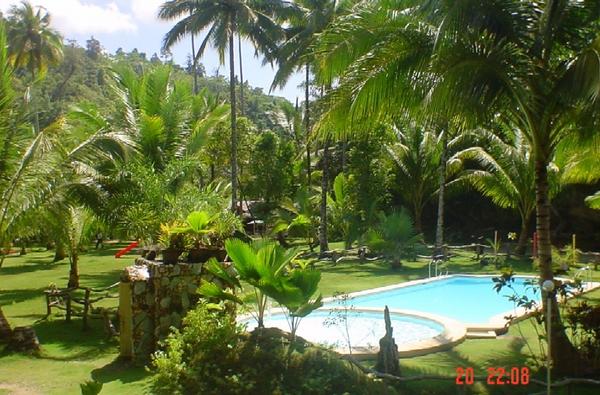
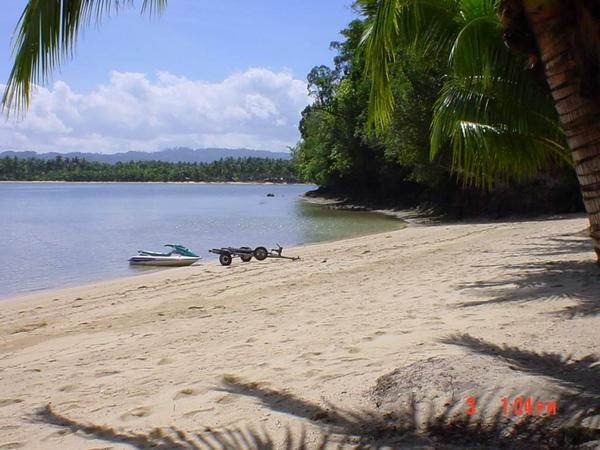
I had written about the Kansilad Beach Resort in Lianga about a month ago and even included several pictures of the resort in that post entry. The response has been lively and some visitors to this blog have requested for more pictures.

My visits to the Kansilad have been less frequent recently but the few times I have been there since then have left me with the lingering and lasting impression that the many who have passed by Lianga without ever visiting the resort have lost a singular opportunity to see what human ingenuity in combination with breathtaking natural scenery can accomplish in tandem.

Like many relatively young resorts, Kansilad is a work in progress and a lot more must be done to enable it to achieve its greatest potential as a prime tourist draw. But the potential is there and given time and the proper condtitons, Lianga may soon see the resort as not only a mecca for local tourists but also for foreign visitors eager for the taste of not only sun-drenched fun and excitement but also relaxation and comfort amidst lush, tropical surroundings and exotic, natural scenery.

Need I say more? Another round of tequila please.

Monday, October 9, 2006

An Absurd Necessity

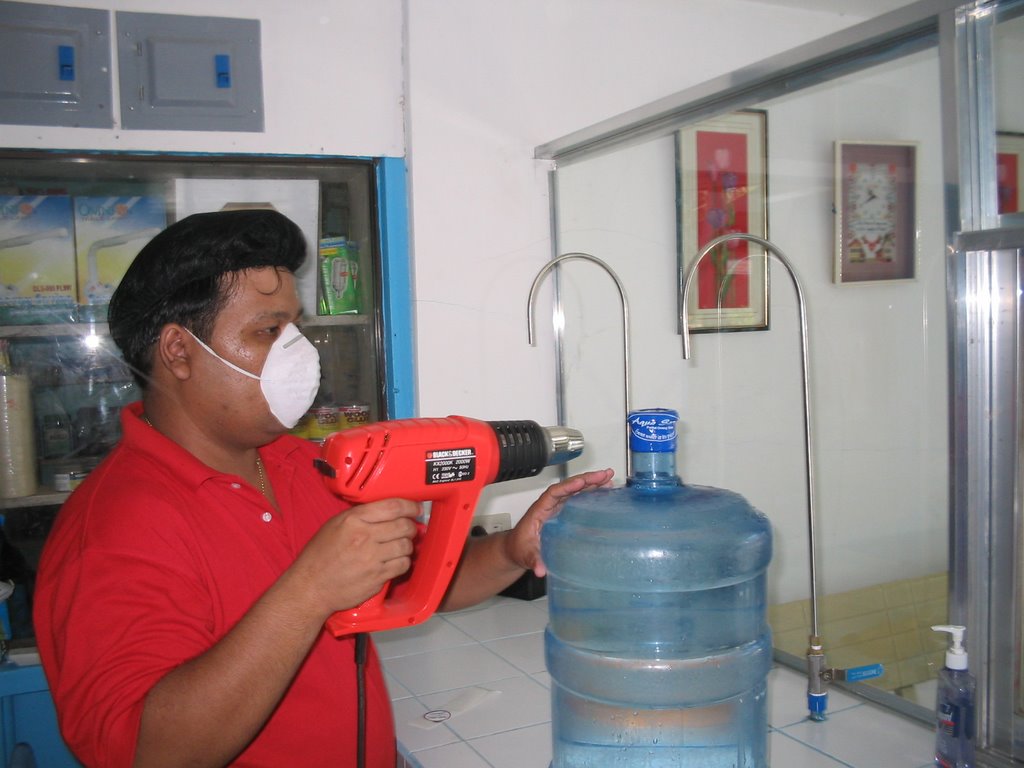
If somebody told me ten years ago that I, together with a large part of the population of Lianga, would be drinking solely purified water from a water refilling station I would have thought that somebody had a sudden attack of insanity or had too much to drink of tuba, the local coconut wine. After all, this coastal town does not exactly suffer from a shortage of sources for water and practically anywhere in town all you have to do is drive a pipe less than fifty feet and you can pump out sufficient quantities enough for household use. It is not the supply of water that is the problem but its potability.

Decades ago, nobody worried about chemical, mineral or bacterial contamination in the water. Water was water and whatever the source, all drank it without any fuss. That, of course, is no longer true today and there are internationally accepted standards for determining the suitability of water for drinking purposes that are promoted even in remote towns like Lianga.

The town has a utilities company that has responsibility for managing the local water supply system. But budget limitations and an outdated distribution infrastructure have not exactly been an assurance against contamination. In the past, salt water intrusion in the water supply was a serious problem and although that problem has been minimized, the purity and potability of the water coming out of local faucets have remained doubtful.

Purified water from commercial water refilling stations have provided the people of Lianga with access to safe drinking water and have no doubt contributed greatly to a reduction in cases of waterborne diseases. They have filled the gap in essential services that the government has not been able to provide. It is, however, an expensive alternative and an additional financial burden in times of economic hardship.

But until the government can invest in the needed infrastructure and expertise that will ensure that small towns like Lianga can finally have access to truly potable water in their own homes, then water refilling stations will have to stay and people will have to pay dearly for something that is supposed to be theirs for little or no cost at all.

Friday, October 6, 2006

Children Of Strife

The more than 30 years of armed conflict between the government and Communist insurgency in the countryside and rural areas of the Philippines has exacted a heavy toll in terms of human casualties on both sides.

Small towns like Lianga, being located right within a so called rebel "area of influence", has been, on several occasions, touched by the fury of this protracted war and its people have greatly suffered for it. It is a great tragedy that this war goes on even today and that even as the years pass, the physical and emotional wounds never heal and new ones inflicted time and time again.

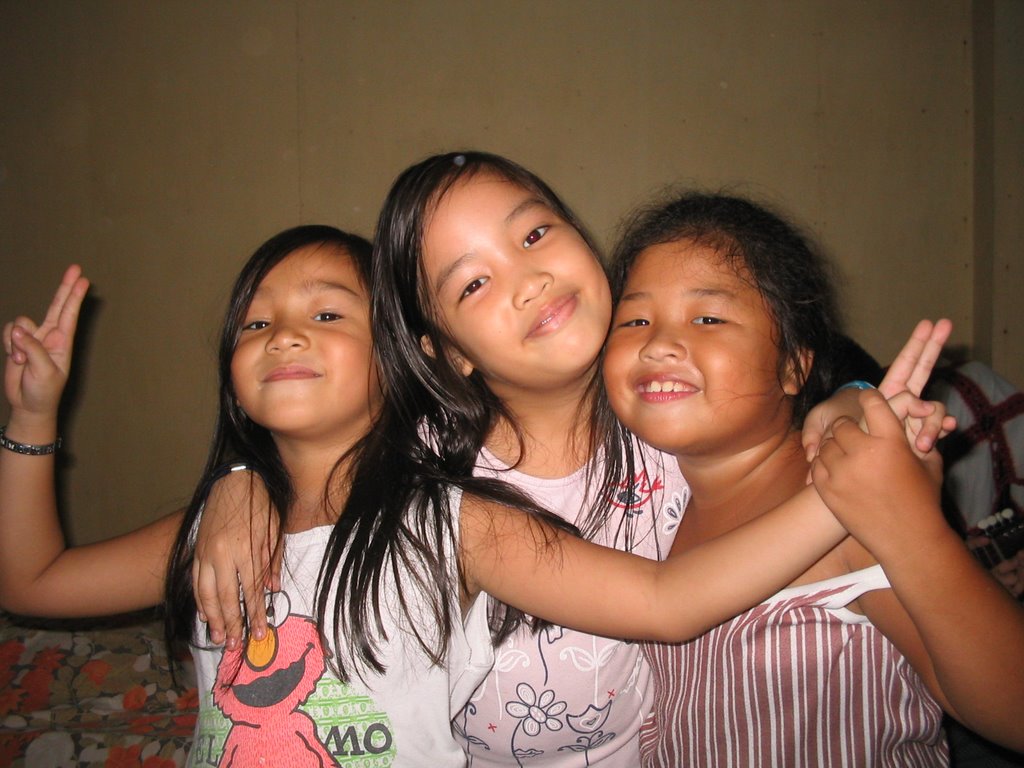
People like Jen are also victims of this conflict but of a different kind. But even so, their lives have been just as traumatized as those who, by choice or accident, lost their lives, saw loved ones lose theirs or whose lives were destroyed by a war that has become, in many ways, a senseless slaughter of innocents.

You see, the government, particularly the 1980's and even until the early 1990's, sought to contain the rapidly growing insurgency movement in the countryside by garrisoning combat troops in key towns and villages in rebel threatened provinces. Soldiers and other military personnel in these improvised military camps became a common sight in the countryside. Contact between these male guests and the local women became an inevitable consequence of this rural militarization.

The fact that many of these liaisons resulted in stable marriages and families is undeniable. But it is also true that just as many of these local women were abandoned and the children born of these unfortunate encounters cursed to live the rest of their lives not only condemned to bear the stigma of their illegitimacy but also to suffer an uncertain future bereft of financial and economic security.

The casualties of war are not only counted on the battlefields, they encompass many others far removed from it. The one great mistake is to forget that Jen and others like her are merely part of the "collateral damage" rather also actual and legitimate victims of a war that should have ended decades ago.

Tuesday, October 3, 2006

Ironwood

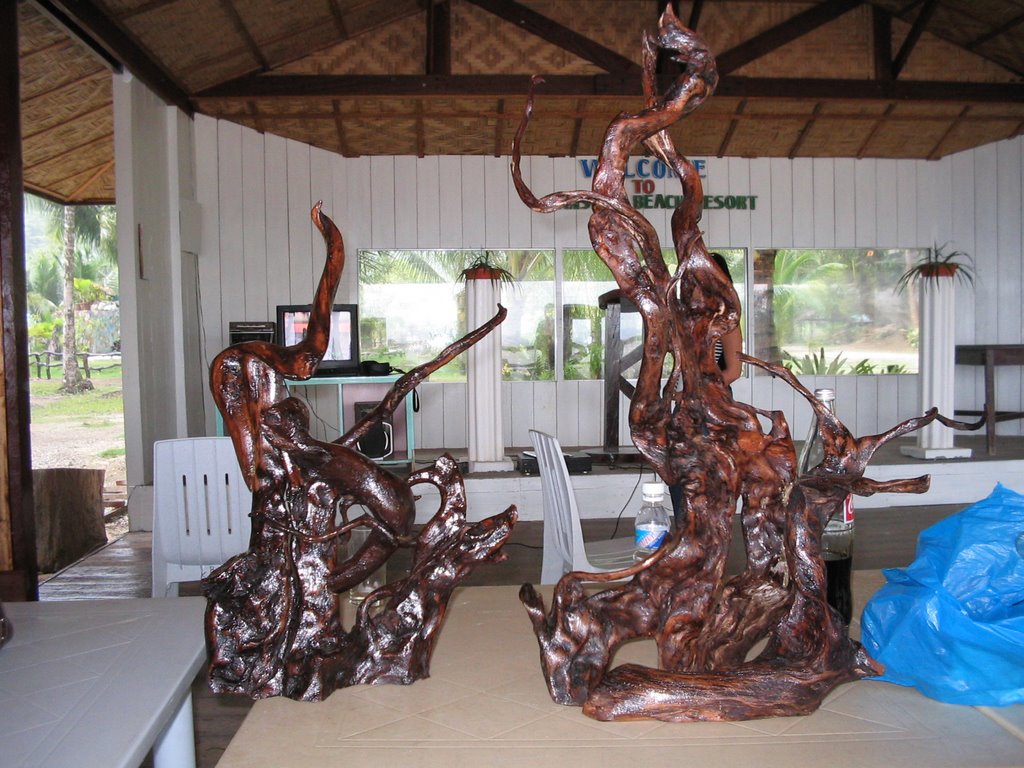
One of the things that Lianga is well known for is furniture and decorative items made of a local species of Philippine hardwood known as Magkono. The tree from where this durable, dark-colored and extremely dense wood comes from apparently grows only in the dense forests of the surrounding area and rarely anywhere else.

Magkono wood is so hard that it is also called "ironwood" and cutting down a mature tree even by modern methods is still a time consuming and laborious process. When I was a child, I once witnessed a man trying to cut down a bridge post of Magkono wood with an ax and I could still remember the sparks that flew everytime the ax head made contact and the speed with which its cutting edge became blunted after only a couple of blows.

Furniture made from it can last for generations and is impervious to termites and other wood-boring insects. If skillfully made and elegantly designed, such furniture items are heirloom pieces and can fetch really hefty prices in the furniture market.

The scarcity in the supply of Magkono lumber, however, and the banning of any commercial cutting of Magkono trees have made it difficult for furniture makers to supply the huge demand for Magkono furniture pieces and going around the government ban can be an expensive, risky and dangerous business if you consider the harsh legal penalties you might incur if caught red-handed by the law.

The supply for smaller decorative pieces and knicknacks made from the same wood is more readily available if you know where to look for them. Coffee tables with stools, table ornaments, fruit bowls and trays, and the smaller decorative items and souvenirs are always a hit with Lianga outsiders and are constantly in demand as gift items.

The Magkono tree and its wood has been used many times as a symbol for the toughness and resiliency of the people of Lianga. But it is fast disappearing and the illegal cutting of many of the few remaining trees found may soon spell its doom. It may be tough and hard as iron but that is no defense from avarice and greed of men who are supposed to be charged with its protection and conservation for the future.

Monday, October 2, 2006

To Be Young

I used to remember my grandfather grousing every time young children would come to play in the our house in Lianga. To him, the children meant a lot of noise and distractions, and he preferred his peace and quiet, just sitting quietly and reminiscing about the good old days.

Personally, I have always felt that most adults, in most cases, do not actually detest the idea of children playing around them or within their vicinity. They may proclaim vociferously that their work, if they are really doing any, is disturbed and hampered but the fact of the matter is deep inside we actually envy children and their infinite capacity to have fun.

A friend of mine who is in his sixties and who shares this view once told me that one of the reasons why he liked watching children play in and around his house is simply a sense of nostalgia, a deep longing for the innocent pleasures of his childhood. "Ah, to be young again!", he would exclaim with passion.

Sometimes I do get irked when I am doing some reading or actually working on something important and kids are running around, shouting and making a mess around me. But such occasions are rare. I usually just sigh with resignation and try to find a quieter spot for myself and let the children do their best in something they are the best at, being children.