Tuesday, September 12, 2006

A Wake Up Call

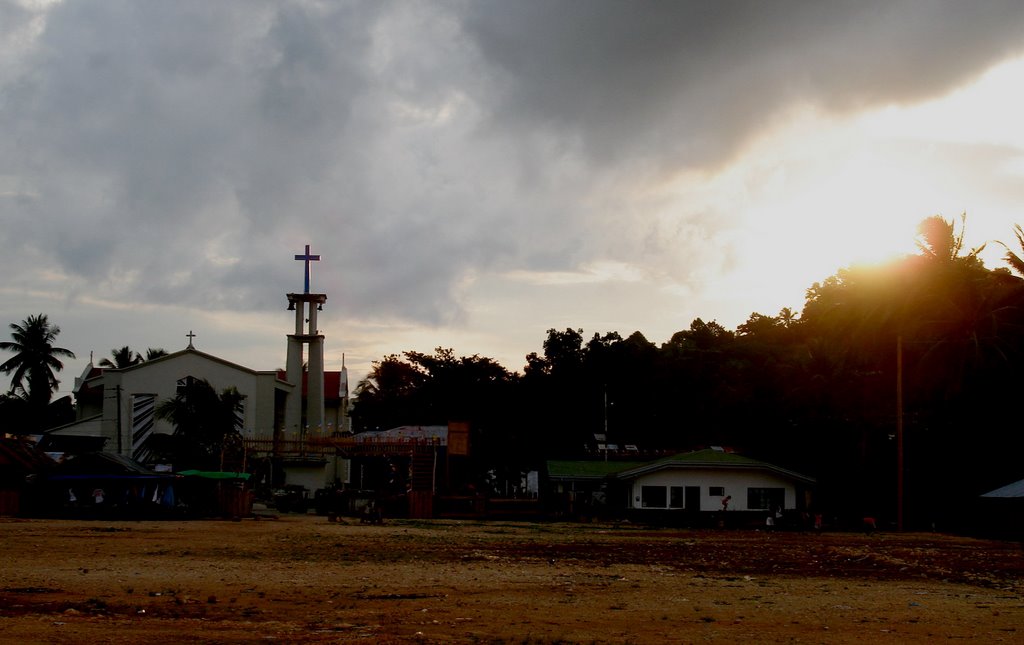
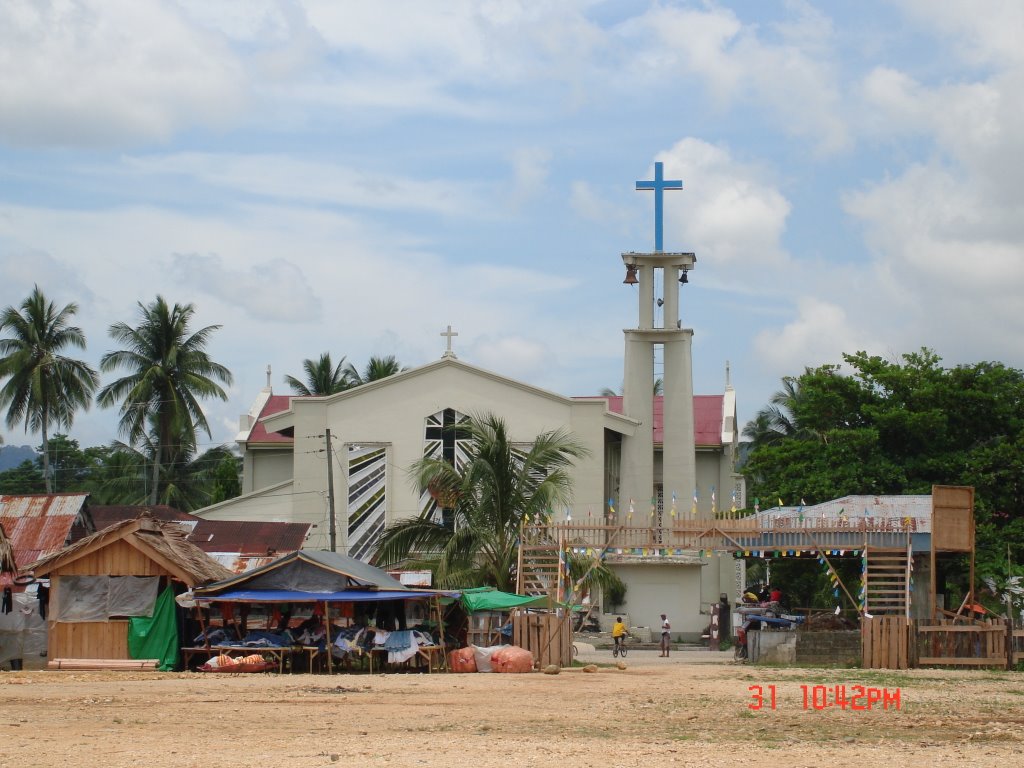
The Catholic Church continues to be the dominant religious force to reckon with in Lianga but it is clear that it has lost a lot of the strength, vigor and vitality it used to have in the past. In fact some local pundits are saying that where it not for the hundreds of babies the Church baptizes every year into the faith, Lianga would probably now be lost to the Protestant churches or the other non-Catholic evangelical faiths that are slowly but firmly gaining a foothold in the town and which are making their presence felt more and more over the years.

Since, in the Philippine setting, religious authority translates into social, political and cultural influence over the community, what is seen as a gradual but constant erosion of the Church's once supreme authority over local religious life is beginning to worry a lot of its leaders in the clergy and the layman community who see the Church as the sole guardian of the moral and spiritual life of the nation.

In the case of Lianga, many politicians and community leaders now regularly and actively court the political support of these other religious groups who have become aware of their emerging influence and who have began to play more assertive roles in the community. This is something the Church leaders worry a lot about but worry is all they can do at this point. Theirs is no longer the only show in town and in truth, they have only themselves to blame for it.

The main reason for the decline in Church power and influence can be traced to the degree it has become divorced from the day to day lives of the people and the community. The inability of the institution and its teachings to adjust to the changing times and, therefore, remain relevant in the context of modern life has led to its being sidelined by many Catholics, particularly the young, who see their faith merely as an anachronism and, thus, a hindrance or nuisance rather than as a source of spiritual strength and inspiration in their lives.

Yet the institutional Church together with the clergy have remained largely complacent and unheeding to the call to address the issues of reform and modernization. And it has failed miserably in many ways to reach out and makes its presence felt in the daily lives of the faithful. It has, instead, chosen to become a largely impersonal and aloof entity perceived by many to be separated and out of touch with the community of believers.

Catholicism in Lianga is indeed alive but certainly not kicking as it should be. It has become a religion of rote and habit, of ceremony and pageantry and but sadly lacking the fire, warmth and the vibrant fervor of an energized, growing and living faith.

Sunday, September 10, 2006

A Filipino Diaspora

There is something gravely unsettling about the on-going flood of Filipino nurses going abroad in search of higher pay and better economic opportunities. The migration is not, in itself, something new. Over the decades, our nurses have always been in great demand overseas but the sheer volume of them on their way out of the country now and the resulting negative impact this has over the nation's public health care services is becoming alarming.

The Philippines may be running out of experienced nursing personnel but worse than that, it may be also running out of doctors. Many in the medical profession have opted to take the previously unthinkable step of studying nursing in order to escape what many of them see as a bleak economic future for them here. After all, when many doctors, particularly the thousands in the government service, earn only as much as an ordinary, middle-level civil servant, the prospect of a dollar paycheck even as a "lowly" nurse abroad can be temptingly attractive in these times of great economic hardship.

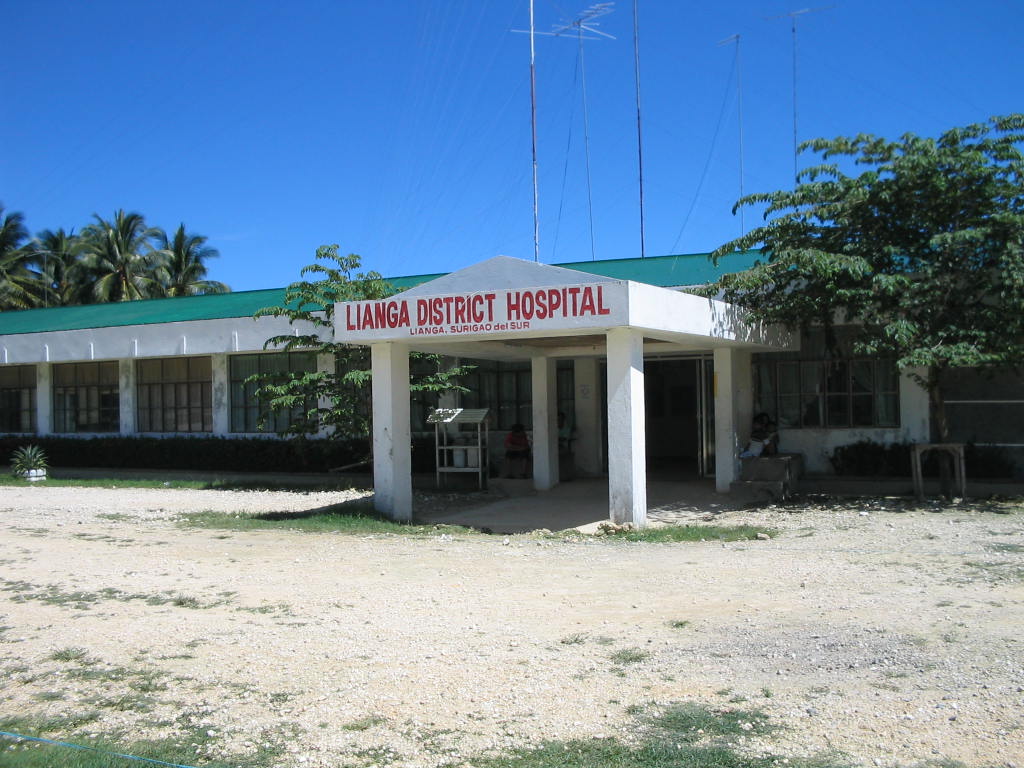
My father, who spent many years as a physician in the public health service, would have been appalled by the present state of the profession he had served so well. When he was still alive, he had always fought and lobbied for better pay and better working conditions not only for doctors but also for nurses, pharmacists, nursing aides and all others working in the local health service. In a time when no doctor would want to work in a rural, backwater town like Lianga, he buttonholed local government officials to subsidize salaries, improve local hospital facilities and even personally recruited physicians to participate in the government's rural health programs. The local district hospital serving Lianga today is a testament to the success of his unceasing crusade to bring the benefits of modern health care to the rural countryside.

But even he would have been helpless in finding ways to help staunch the hemorrhage of medical talent going abroad today. One cannot promote patriotism on an empty stomach and the chance to make real the dreams of a better life and greater financial security cannot compete against selfless and noble altruism.

But to blind ourselves to what is happening is to ignore the gradual destruction of the very soul of this nation. I know many of those who are now in far away lands in search of a better future for themselves and their families. They are family, relatives, friends and acquaintances. They are the among the best, the most productive, the most highly educated of our people and would have been a vital and essential component in our struggle to build a brighter future for the Filipino nation.

The physician, including all those in the allied medical professions, have always occupied a very honored position in Filipino society. They are looked upon as healers and respected for their important role in fighting disease and promoting health in the community. It is sad to see that even they have been reduced to become like us, mere ordinary mortals struggling to survive on meager paychecks and even meager hopes for a way out of crushing financial hardship.

A doctor friend, who once had a private practice and who later served in the government as well, summed it up for me recently. "My more than ten years of university education," he said, " has entitled me to an income that my small family can barely survive on. Don't talk to me about the dignity of the medical profession and the nobility of public service. I have been there. There is no nobility in poverty." A year ago he graduated from nursing school and eight months later he was in the United Kingdom working as a nurse.

Argue about that.

Thursday, September 7, 2006

The Chinese In My Life

I cannot run away from them. They are there in everything that I do. When I pick the foods I eat, when I choose what I wear, when I select what I read, when I decide which movies to see or TV channels to view and they even have a hand in the way I think about and perceive the world I live in. They, in no small measure, even determined, from birth, how I would look like. Without a doubt, they are my single greatest influence. Who are they? They are the Chinese in the my life.

My paternal grandmother's father was a pure blooded Chinaman who started it all, not that I blame him or anything. That made my grandmother a Chinese mestiza who did not even have the decency to learn how to speak Chinese; a most unfortunate circumstance which led to many embarassing situations decades later when, in many instances, Chinese individuals, thinking I am one of them, hurled gibberish in my direction while I just stood there stupefied and uncomprehending.

My father also looked distinctly Chinese and even had to live with a Chinese nickname. He too, like me, unfortunately never learned the language except for some choice words which he used only when making fun at Chinese speaking relatives and which are extremely difficult to translate accurately into spoken English, and only out of the hearing of curious children.

Then came the horror of horrors. Both of my father's daughters married into families of Chinese descent, one of them even a pure blooded Chinoy or Chinese pinoy at that. A case of like blood attracting each other? Who knows, but the end result is a series of offspring from both families sporting the undeniable physical features of their distinctive lineage. And, lo, the circle was complete. I was trapped like a cricket in a Chinese cricket box.

Over the years, however, I have learned to come to terms with the Chinese influence in my life. It even has real advantages which I often exploit shamelessly. Like getting discounts at some Chinese owned stores or basking in the misleading impression of others that I, although only partly Chinese and not the full-blooded, genuine article, must be also filthy rich like so many of that race.

I have even learned to brag to others about it. When one is the inheritor of one of the world's oldest existing civilizations which is also today's emerging world superpower, one must be proud of one's blood ancestry. Let the others grow green with envy at us. Compared to us Chinese, they are only barbarians, after all.

Monday, September 4, 2006

Paradise Lost


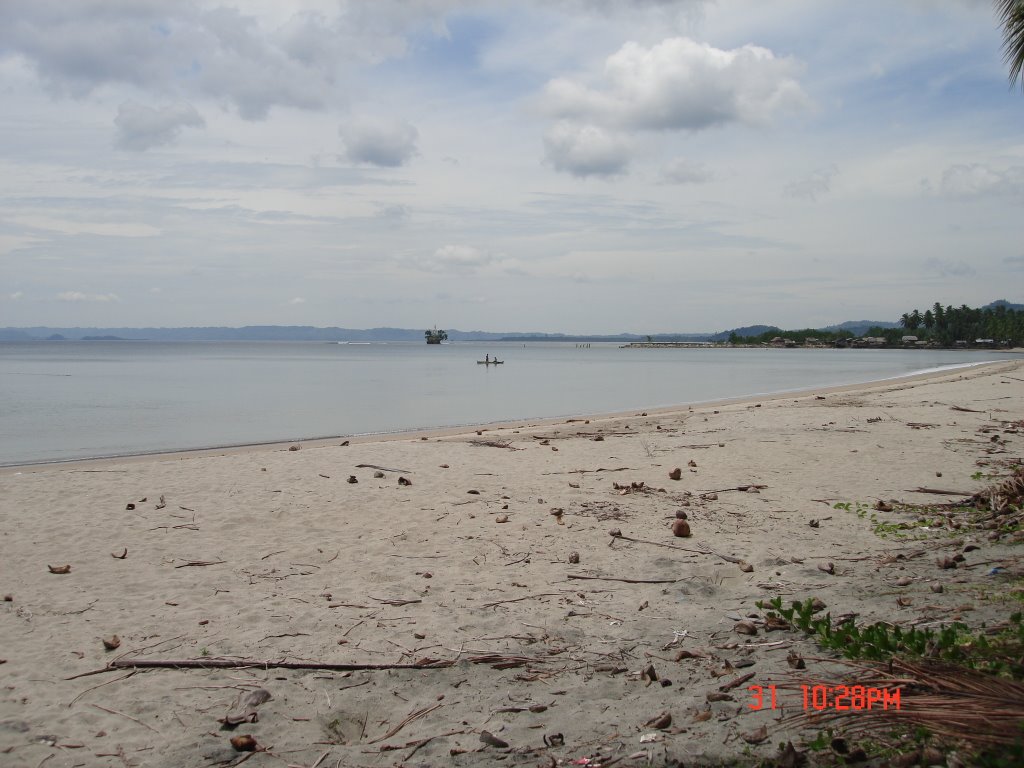
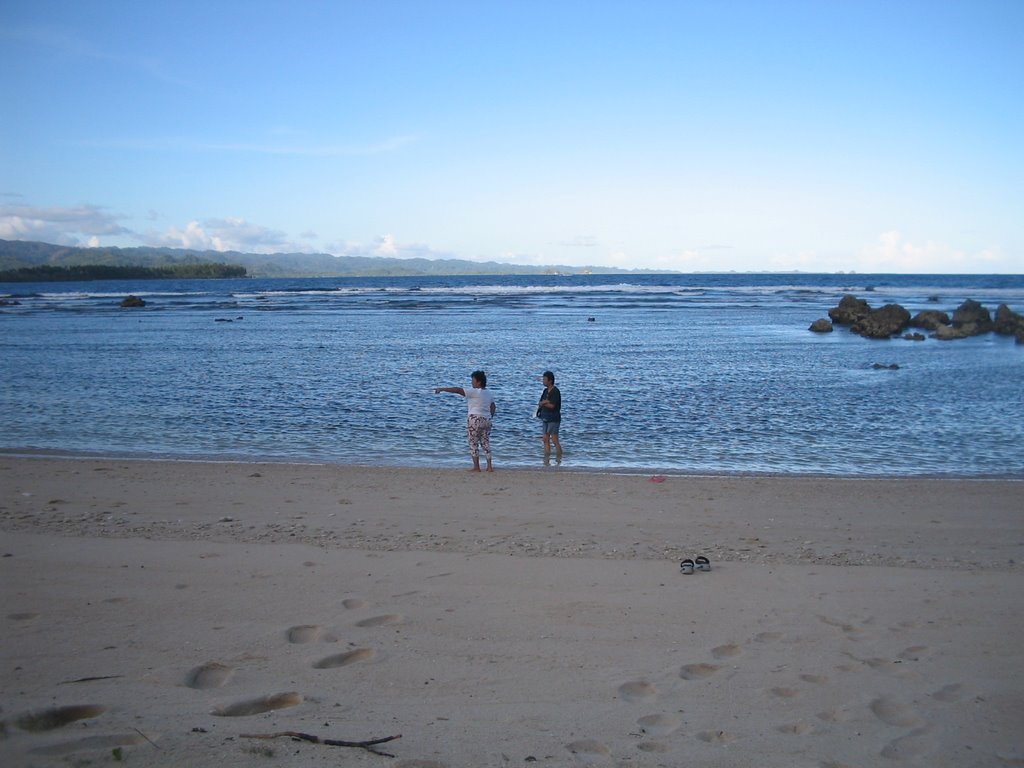
When I was a student for many years in the city, whenever I thought about Lianga, it was always the sea and its beaches that come to my mind.

In those days, the beaches around the town were not yet popular weekend destinations and most of them were still pristine and unspoiled, little slices of tropical paradise for those who chose to venture there.

No seaside cottages marred the landscapes, no feet breaking the perfect smoothness of the sand, no weekenders choking the water's edge and no loud electronic music polluting the air. Nothing except the blue sky, the stretches of white sand, the brooding coconut trees hidden in shadows , the gentle breeze and the silence broken only by the hissing of the surf of the restless sea.

These are fond memories of things past, of places that time have changed. They exist now only as images and impressions in the mind.

Nowadays I seldom visit these places of my youth. When I do, I do not recognize them anymore. They are new to me. I do still remember how they use to be. That to me is enough.

Sunday, September 3, 2006

Good, Clean Fun


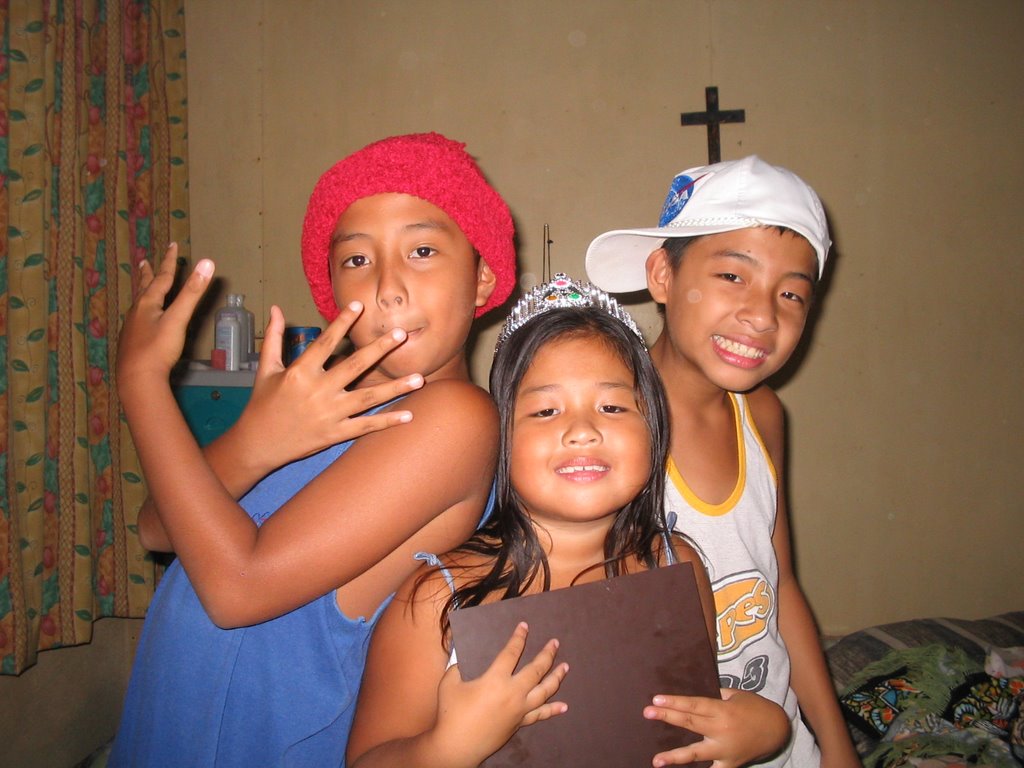
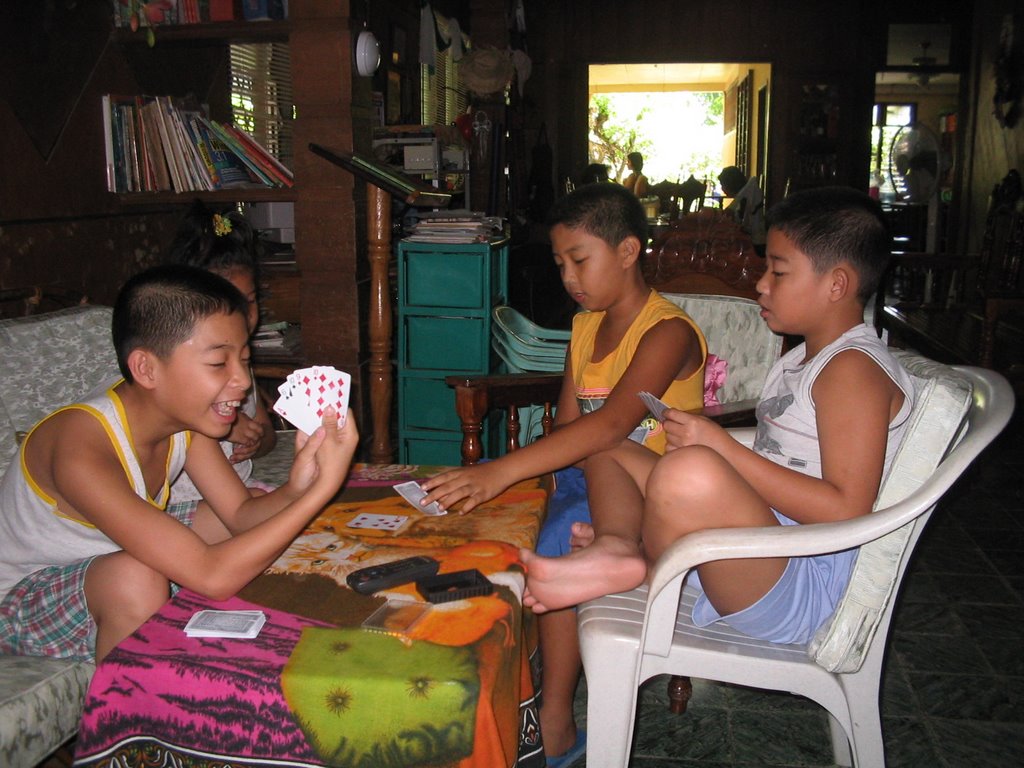
One of the things I like about children is their ability to let themselves go and find fun in the most unlikely times and places. That could mean anything from frolicking in the rain on the first heavy downpour after a hot summer season, to playing house in the backyard with the oddest and weirdest assortment of scavenged materials pilfered from who knows where, to betting against each other in games of chance using a tattered and incomplete deck of cards or just dressing up after raiding an dusty closet or storage box of discarded clothes and accessories.


There is a single-mindedness about this pursuit of fun that always amazes me and transports me back in time to those days when I too was just as obsessed with the joy and exuberance of just being alive; when the world was so inviting, so freshly beckoning and magical.

Kids today may have their computer online games, their portable gaming consoles and mp3 players, cell phones and cable TV, but it is still heartwarming to see them, at least once in a while, have fun the old fashioned way, as these pictures will show.


It is always good to know that even today, when growing up can be so complicated, children can still be children at heart.

Friday, September 1, 2006

Day's End


One of the pleasures of living in a coastal town like Lianga is the chance to do some strolling by sea especially in the late afternoon when the searing sun has lost most of its raging heat and the sea breeze is at its gentlest and most refreshing.

As the shadows lengthen and darkness claim the land, one can watch the sun die in the mountains west of the town. And in the midst of its dying, when conditions are right, an incredible display of bursting, burning hues and colors of rich yellow and fiery red fading to pale, pastel colors can light up the western sky and can stun the unwary spectator. But the incredible spectacle lasts only for a few minutes and suddenly darkness falls and night is upon the world.

In Lianga, I have been privileged to have witnessed more than a few of these glorious sunsets. Of one thing I am certain. The best ones, the most beautiful sunsets I had seen are those you never planned or make time to see.

It is always the unexpected ones, those that catch you by surprise, that can take your breath away. The colors always seemed richer, the hues more vivid and vibrant, the effect more stunning. And as the glorious colors fade and the clouds darken, one is conscious only of a quiet feeling of exultation and gratitude. A privilege given and taken.

Nowadays I take sunsets as they come. Like people, they are all similar in some ways and different in many other ways. But they are all beautiful just the same.